
Yamaha YC61 Drawbar Organ & Stage Keyboard
Yamaha YC61 Drawbar Organ & Stage Keyboard
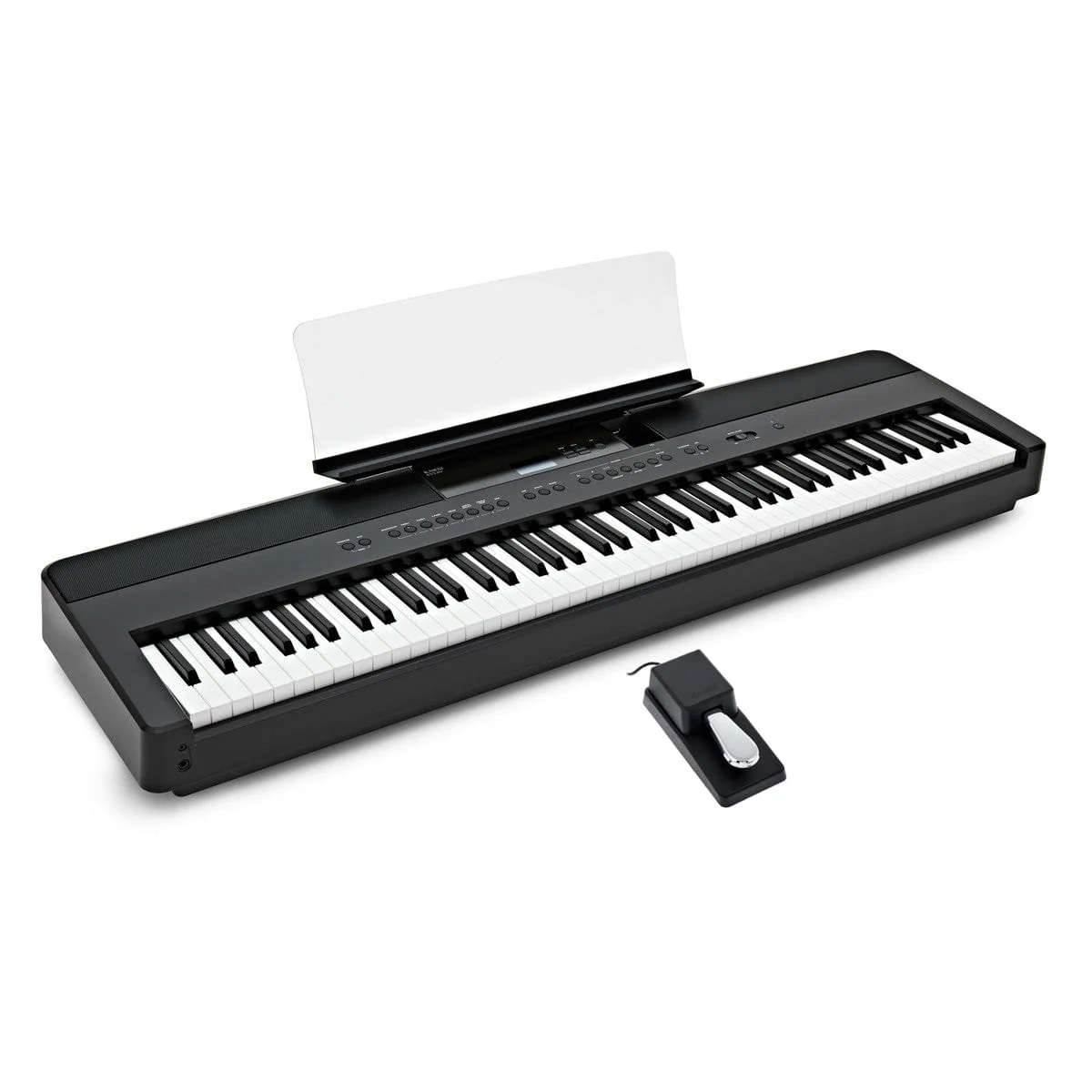
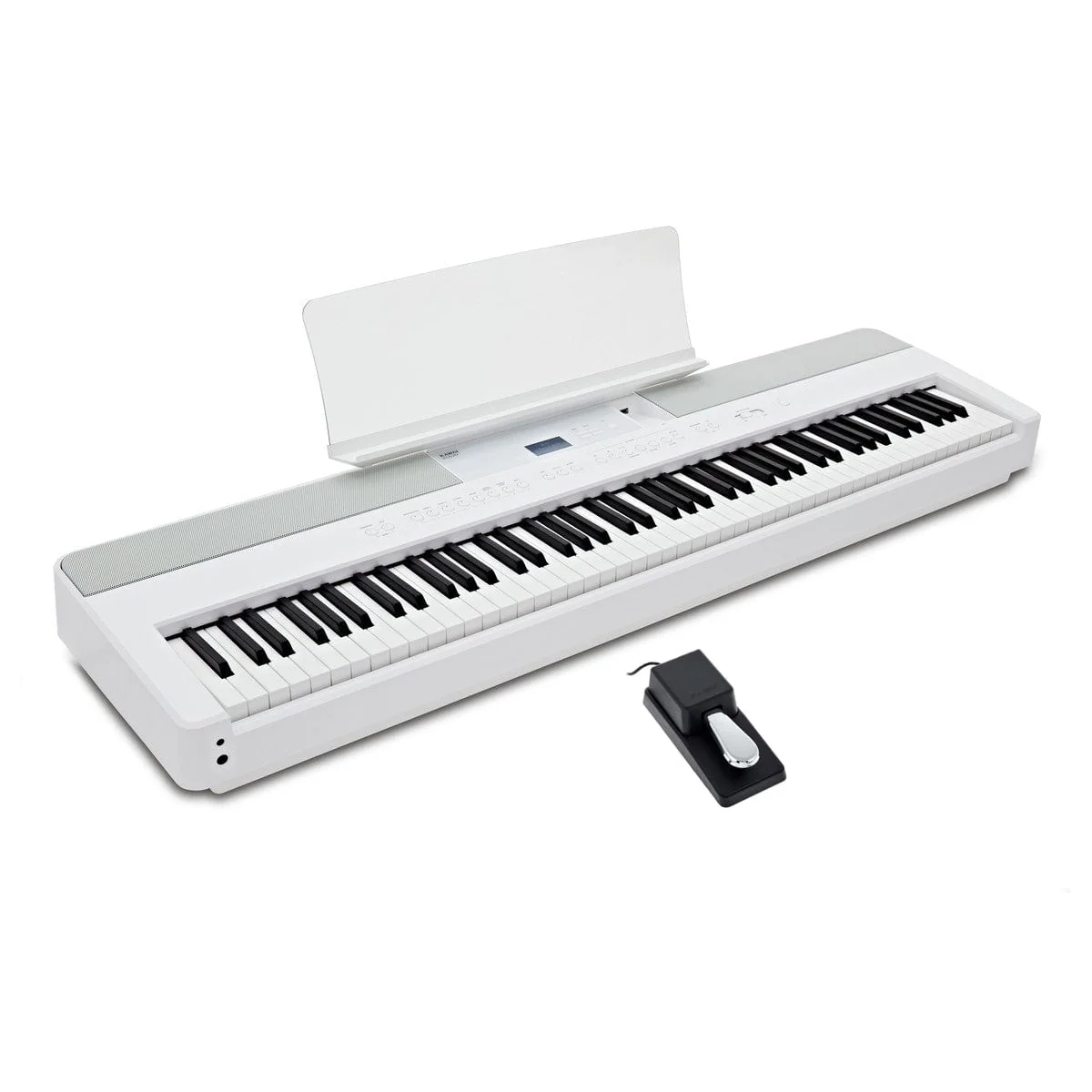
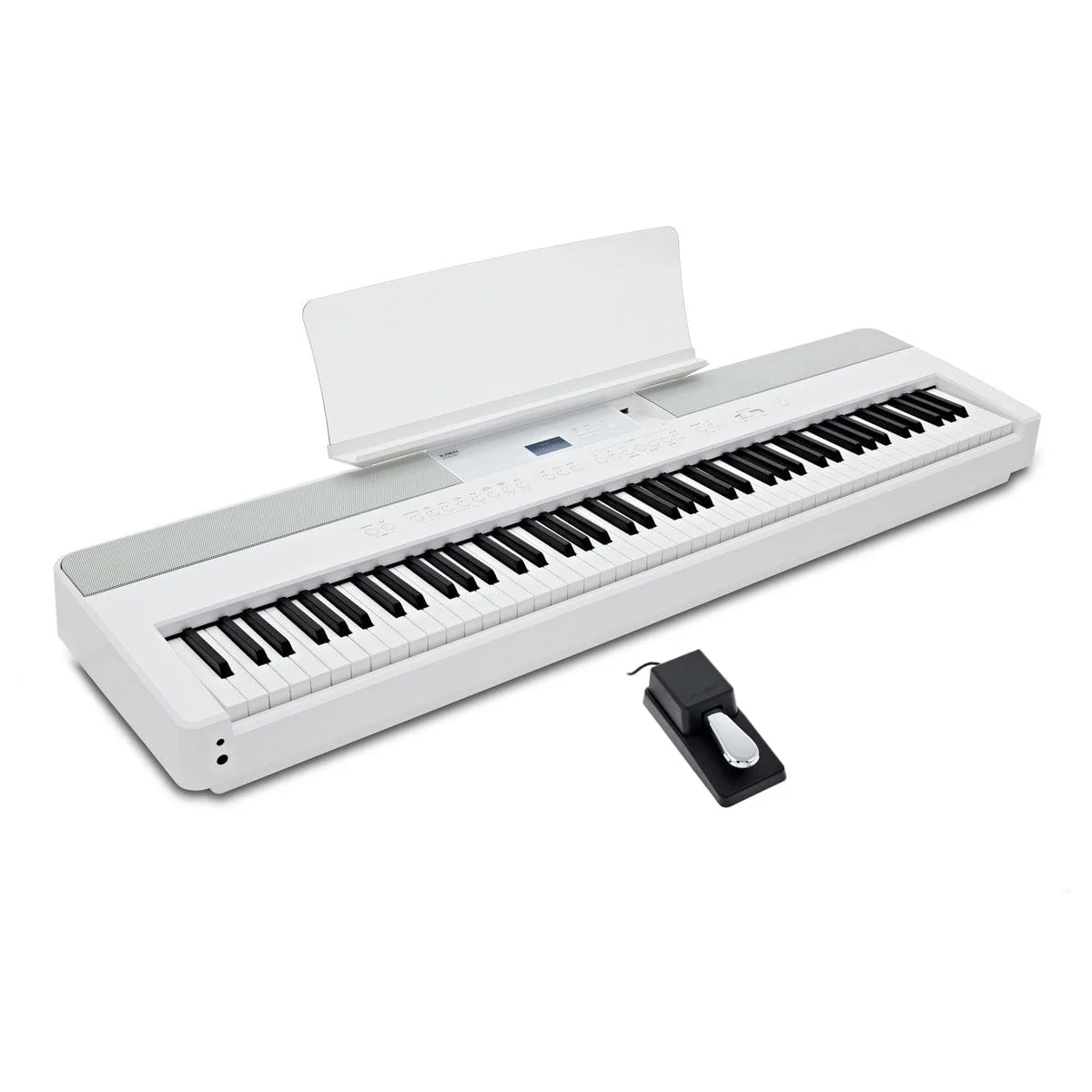
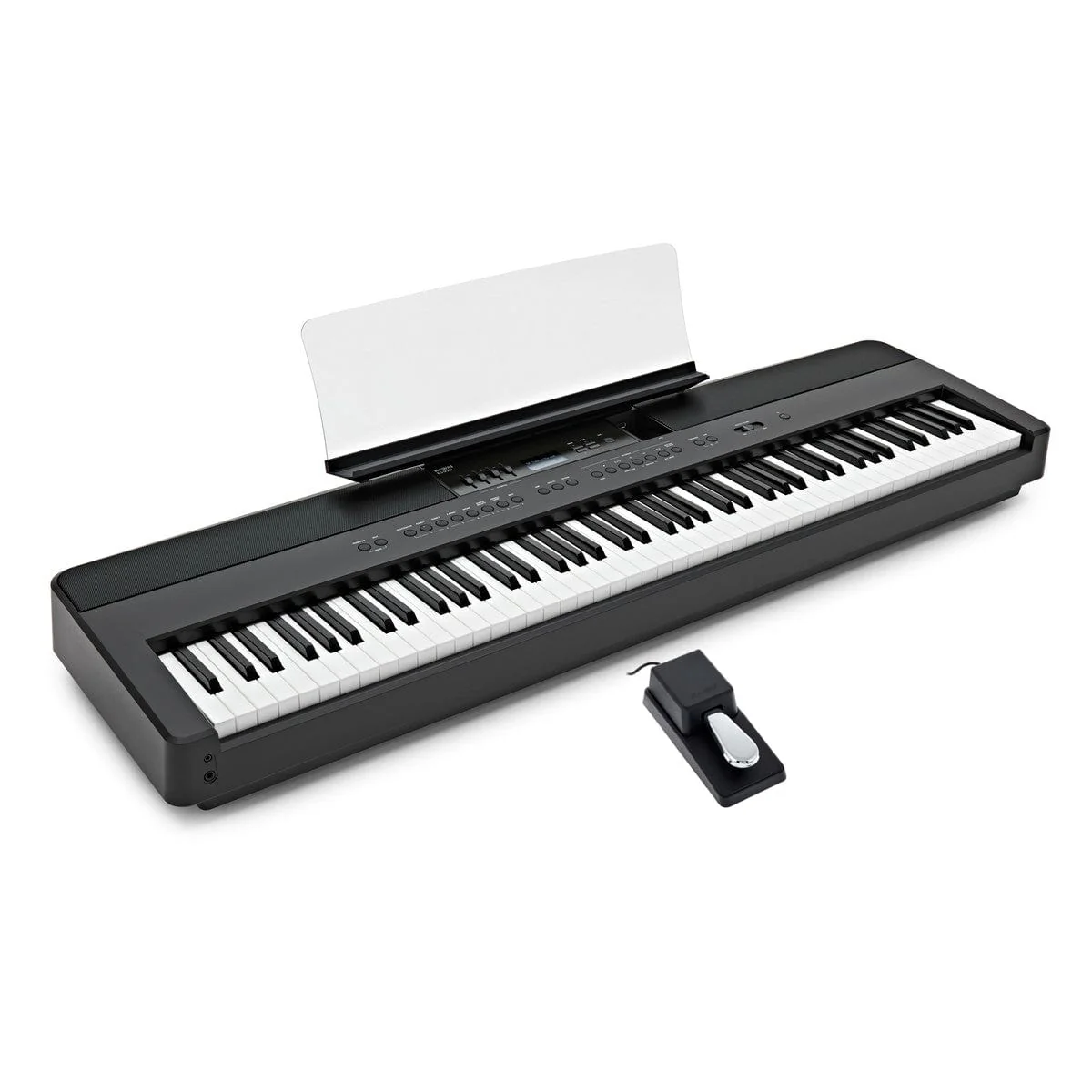
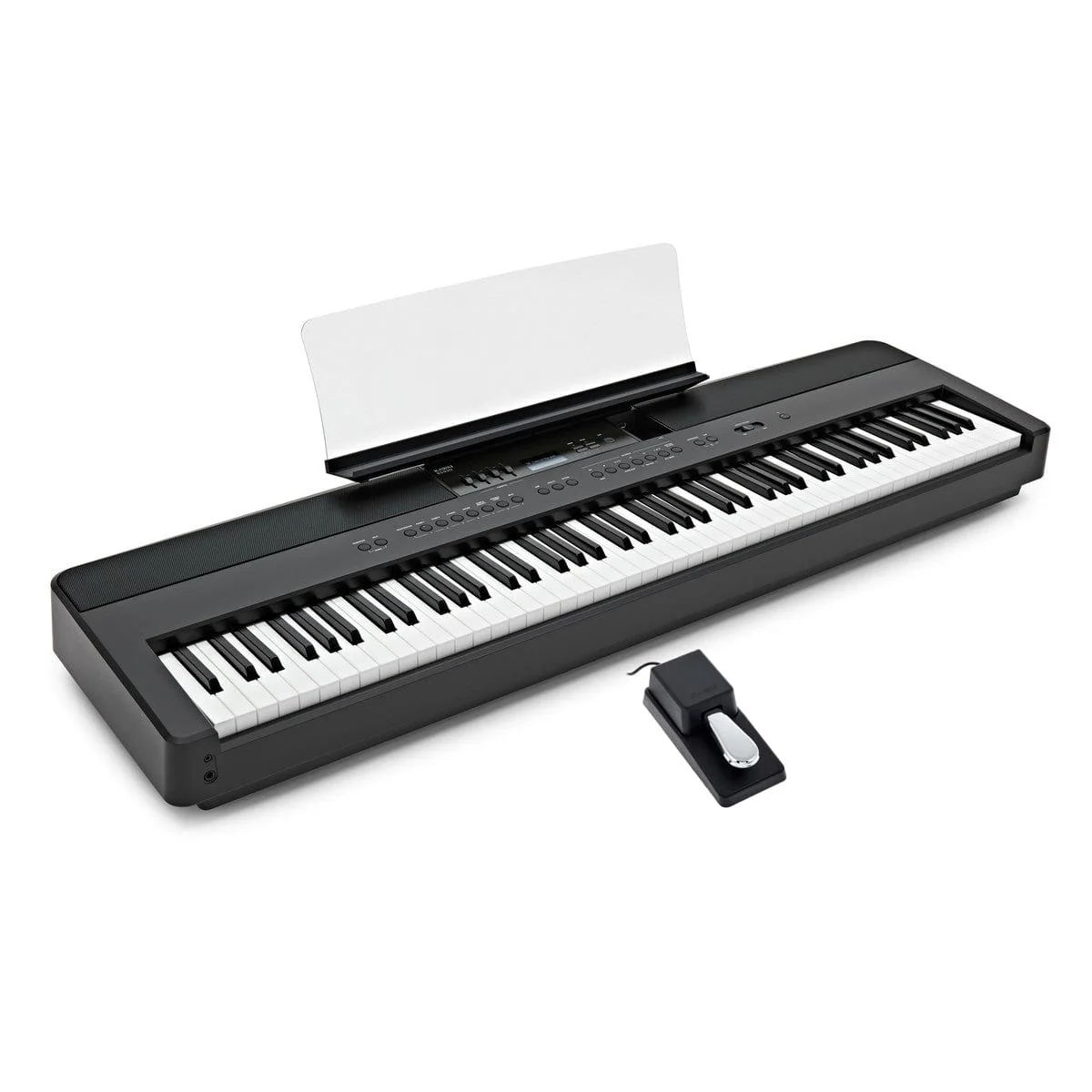
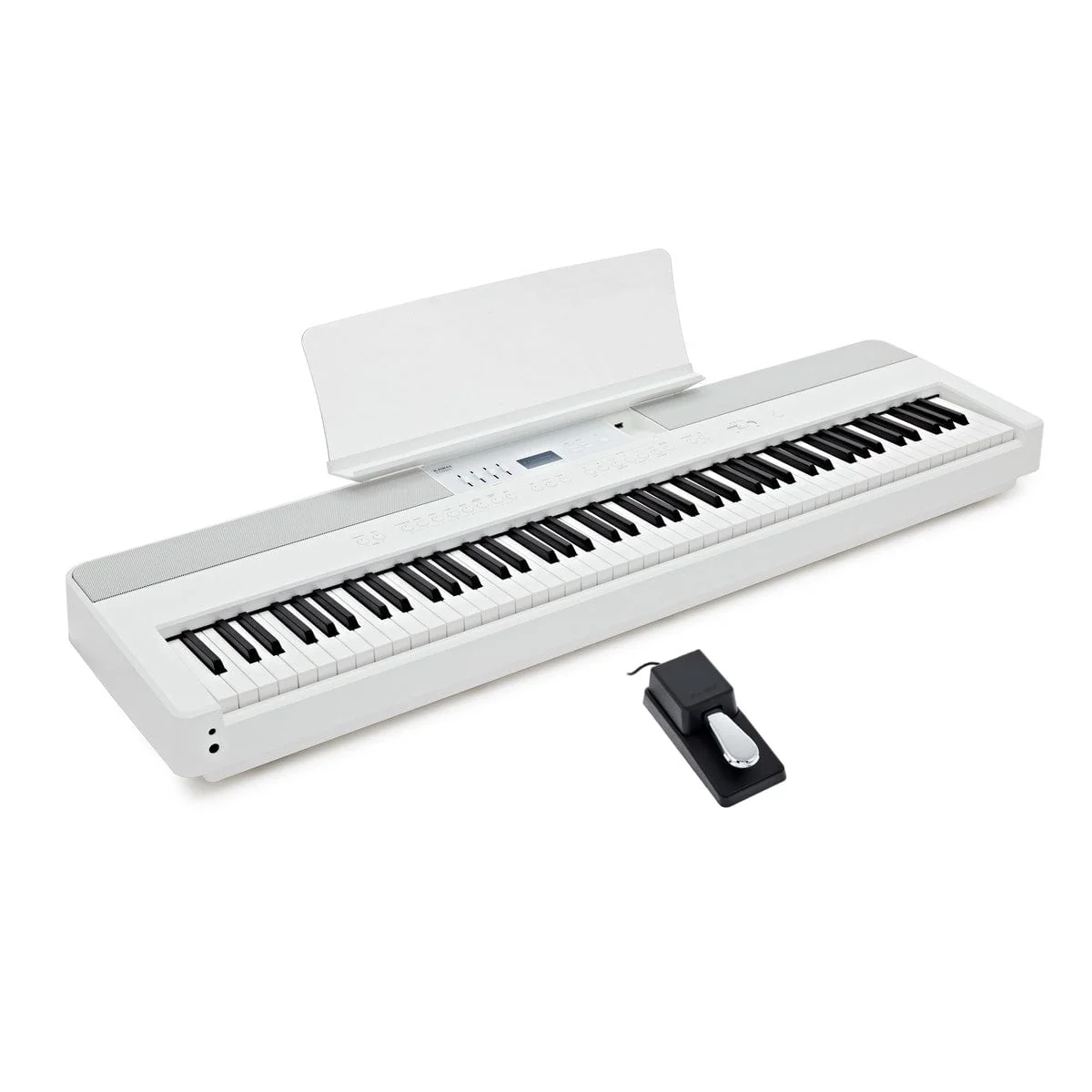
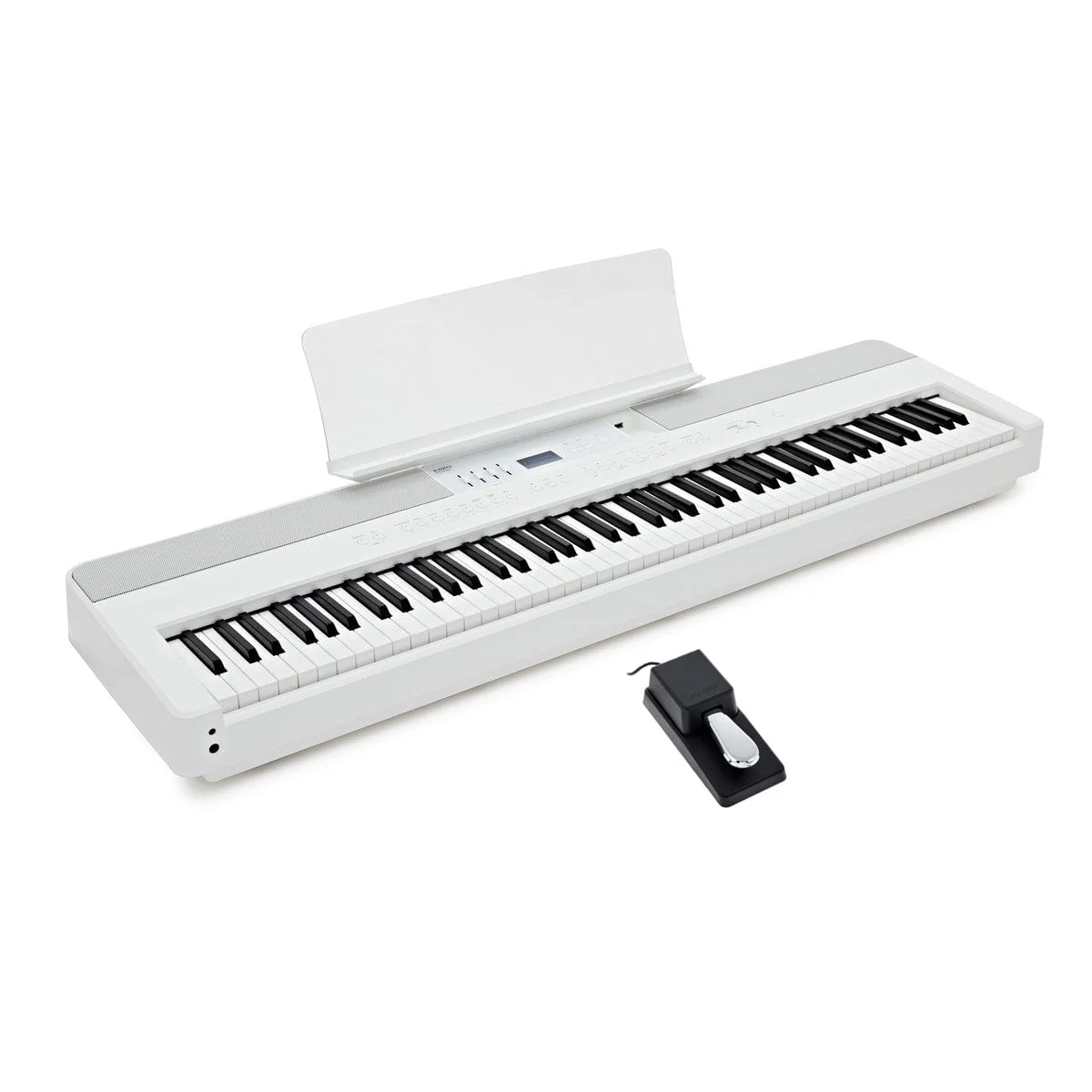
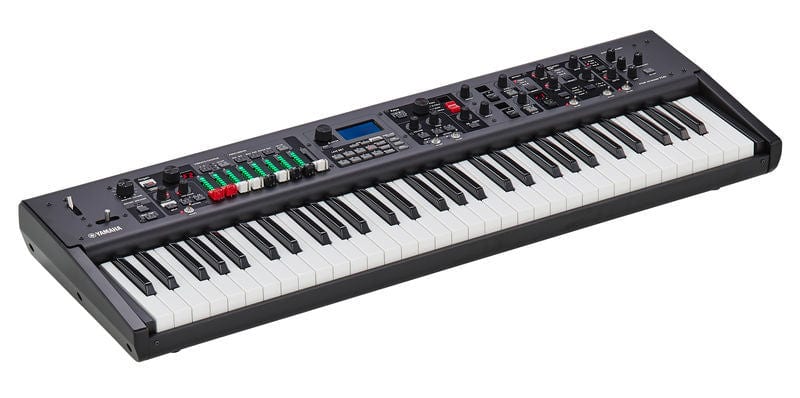
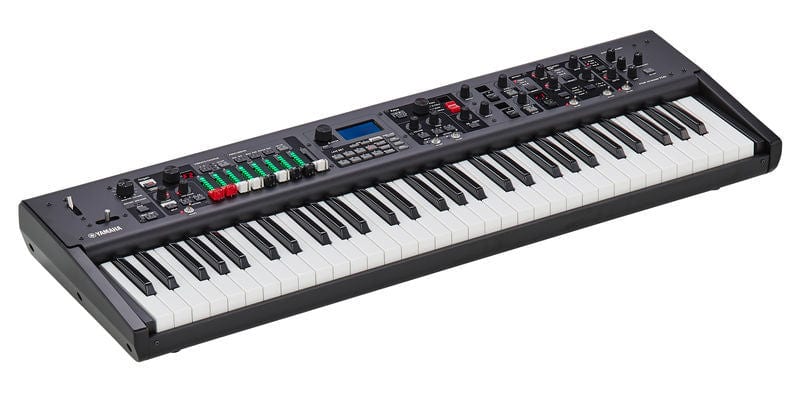
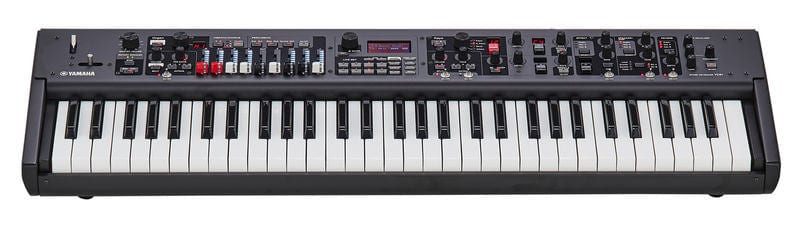
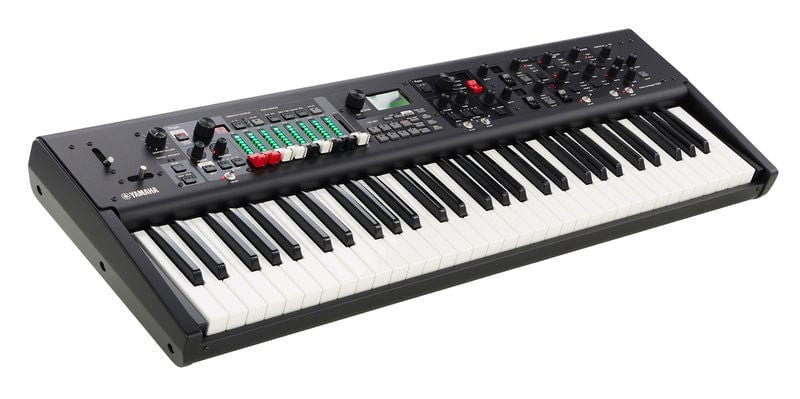
Following the introduction of their CP73 & CP88 stage pianos last year, Yamaha has added a new stage keyboard to their line-up - the YC61. Clearly aimed at competing for market dominance head-on with Nord's Electro 61 or Hammond's own SK Pro, the Yamaha YC61 features a 61 key waterfall keyboard and separate organ plus two 'keyboard voice' sections. These sections can be split or layered across the keyboard as required and your favourite settings (live sets) can be stored for convenient recall when playing live on stage.
The sound of the drawbar organ in combination with a rotary (Leslie) speaker was very popular in 1950's-70's music and can be heard on thousands of famous jazz, funk, pop and rock songs from that era. In recent times the sound has once again become an important part of most professional and semi-professional keyboard player's setups. Manufacturers are competing to maintain their spot on stage by producing keyboards known as 'clones' or 'clonewheels' - which is a take on the original way in which Hammond instruments made their unique sound by the use of Tonewheels.
As stated earlier in this piece, Hammond produces their own portable Hammond stage keyboard (the SK1) which also features perfectly adequate piano & keyboard sounds, as well as top quality Hammond organ voices.
So, let's take a look at what the Yamaha YC61 brings to the table!
Newly developed VCM Organ Technology
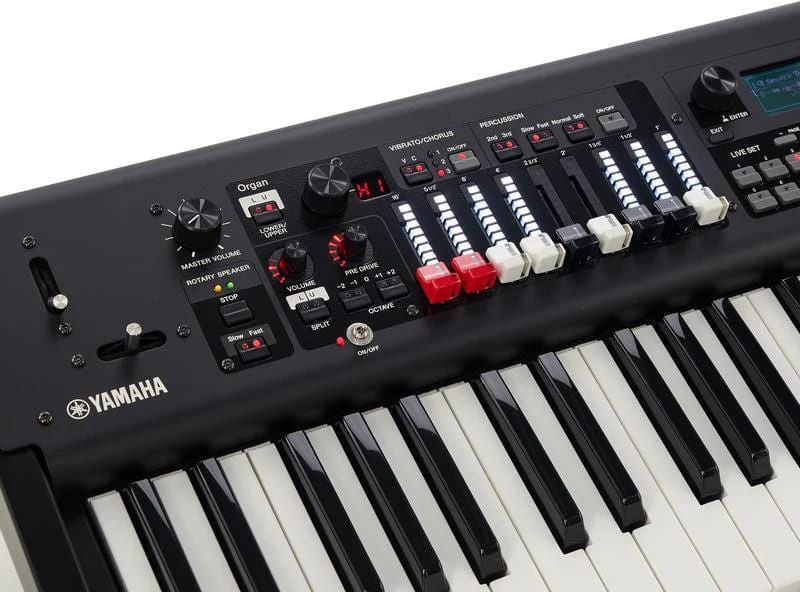
Yamaha's R&D team has created a new technology called Virtual Circuit Modelling (VCM) which they say recreates the behaviour of the key components & circuits that created the legendary Hammond drawbar sound. The results are certainly impressive and a good, wide range of convincing organ voices and tones can be created using the 9 drawbar controls.
Drawbars With Lights!
There's been a long-running debate between owners of Nord & Hammond instruments over the use of lights to indicate the current drawbar registration. Hammond instruments never had lights on the drawbar section, and the first Nord keyboards used a combination of up/down buttons and lights to control the drawbar setup.
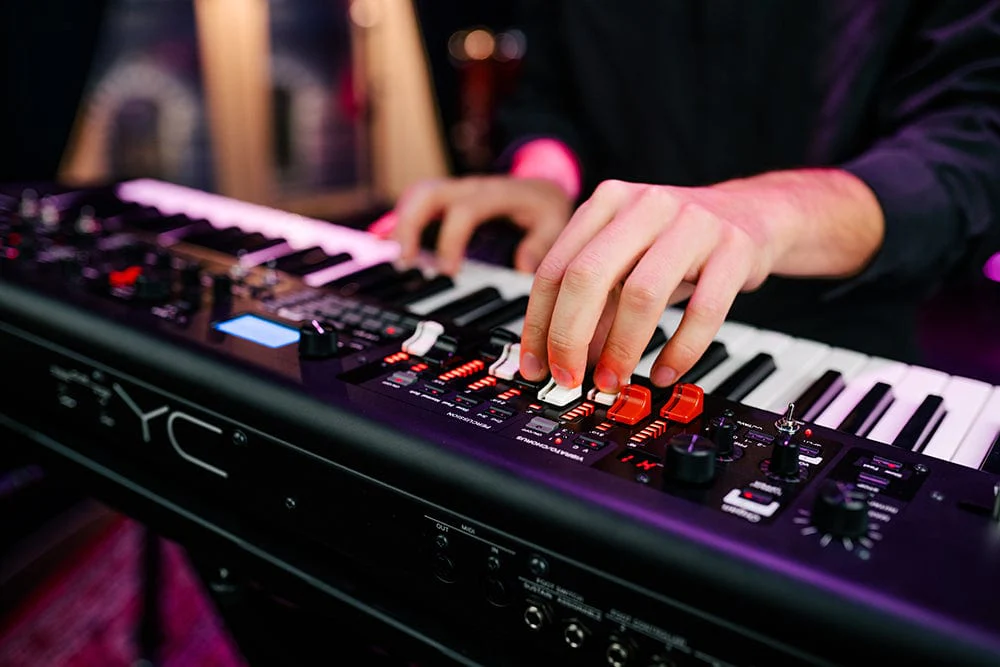
The problem with not having lights means that if you choose a preset drawbar registration which had been previously saved, the current physical state of the drawbars doesn't necessarily represent the sound being heard. On a Nord instrument, the lights indicate the current setup - whether preset or manual, but the models with lights do not have physical drawbar sliders. Dexibell overcame this with the introduction of motorised drawbar sliders and now Yamaha has produced their own version where the drawbars as partially transparent - meaning you can see the lights under the drawbars to give the player an indication of the actual sound which is active.
It's not just about Hammond sounds though - there's a choice of three Farfisa type organ voices - made famous on songs such as Percy Sledge's 'When a Man Loves a Woman' or Elton John's 'Crocodile Rock'.
61 Key Waterfall Keyboard
Just like a piano, the 'feel' of an organ keyboard contributes to the playability. Ask any experienced organist and they will tell you that a non-weighted synth keyboard is not right for playing screaming Hammond solos, or even for vamping to add body to the overall sound. True Hammond organs have a 'waterfall' keyboard which has a little bit more resistance than a non-weighted synth keyboard action, and the edges of the keys are chamfered to facilitate glissandos.
The Yamaha YC61 features a newly developed waterfall keyboard which has been designed specifically for the modern organ player.
Full Range Of Sounds
To make the YC61 an all-round gigging instrument, Yamaha has included a wide variety of high-quality keyboard & synth sounds for a range of musical styles & situations. There are two impressive concert grand voices - the mighty CFX and S700 which have been derived from the same technology used in Yamaha's CP73 and CP88 stage pianos.
Yamaha is famous for the introduction of the DX7 synthesizer back in 1984 and of course, the beautiful FM Electronic Piano voice has been included - thanks to the onboard FM tone generator with 128 voice polyphony. There are also very good recreations of Fender Rhodes and Wurlitzer pianos - again taken from the CP series instruments.
In total there are 146 different voices (6 organs plus 139 other keyboard sounds). These other voices include synth pads, leads, strings, basses and percussion. There are sampled orchestral strings, guitars, brass, saxes & woodwind instruments, acoustic & electric basses, tuned percussion & accordions.
Lightweight for ultimate portability
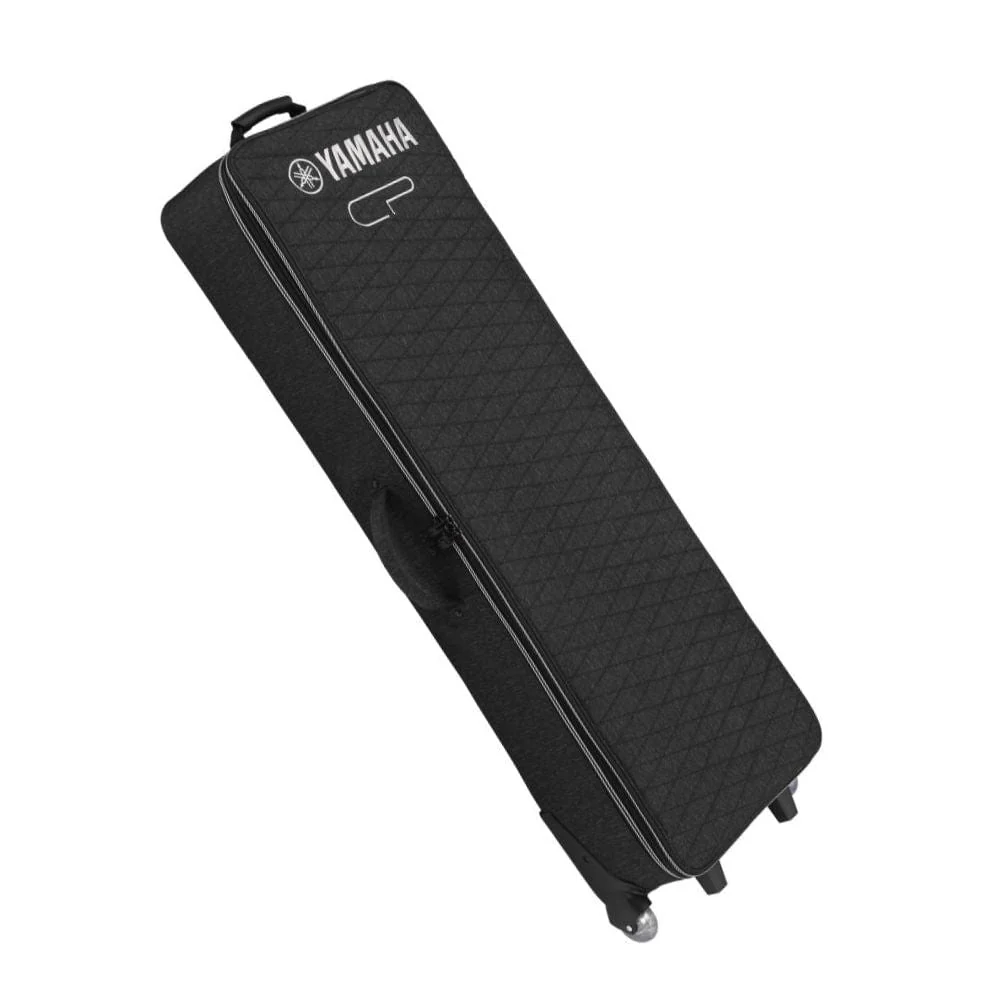
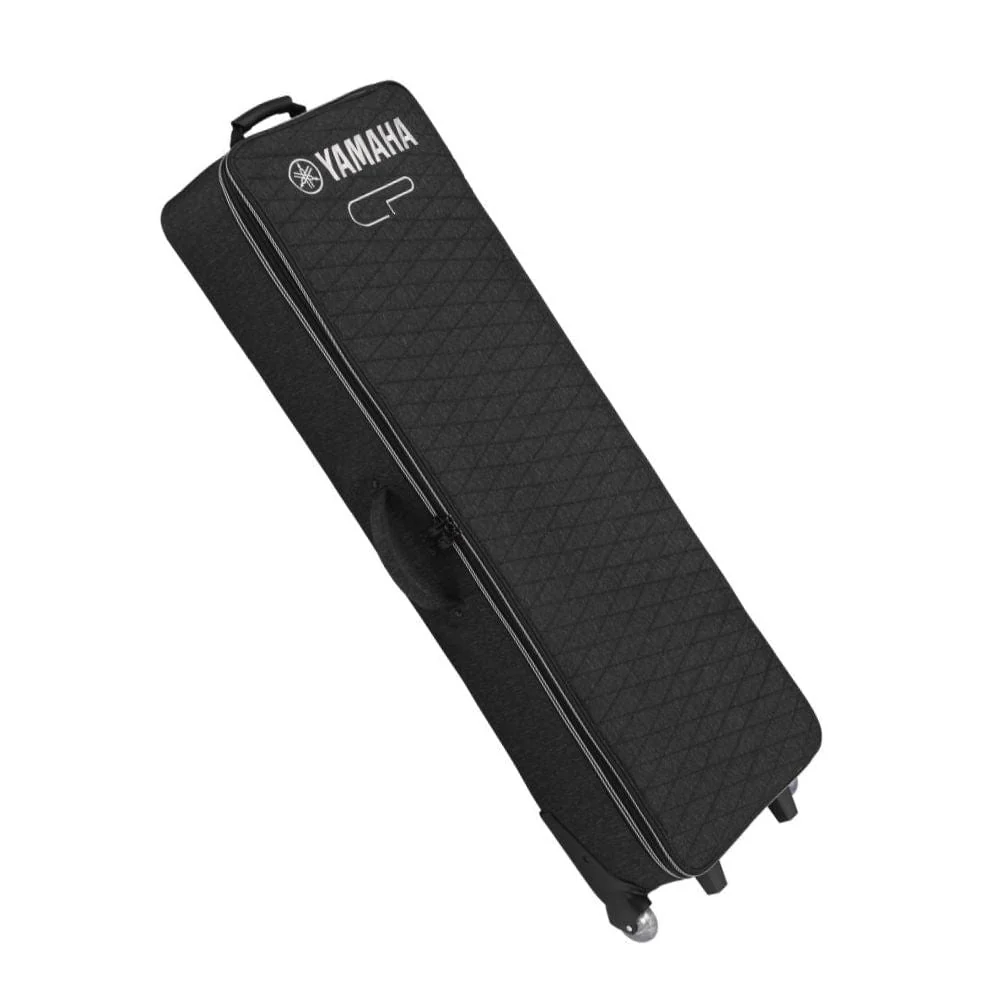
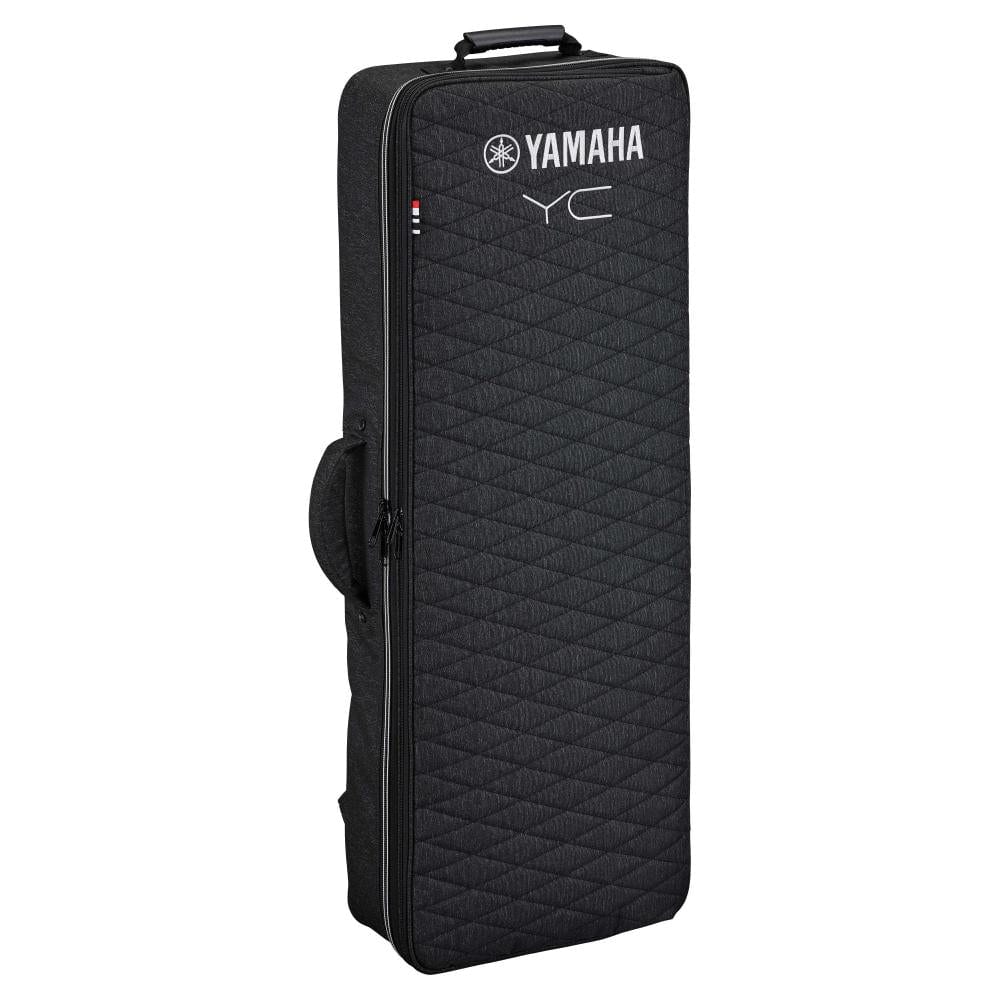
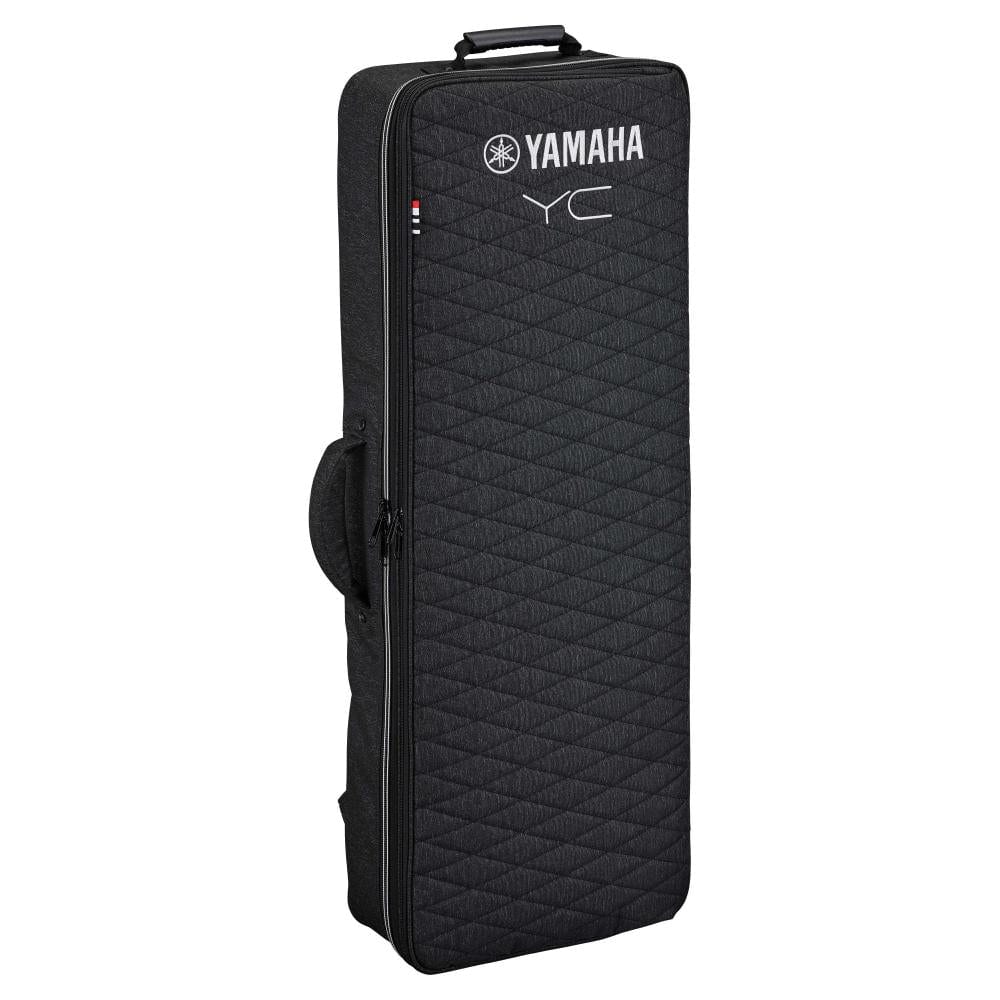
The Yamaha YC61 weighs just 7.1KG which makes it the ideal tool for musicians on the road. There is a dedicated padded carry bag available from Yamaha which is called the SC-YC61.
Hands-On Control
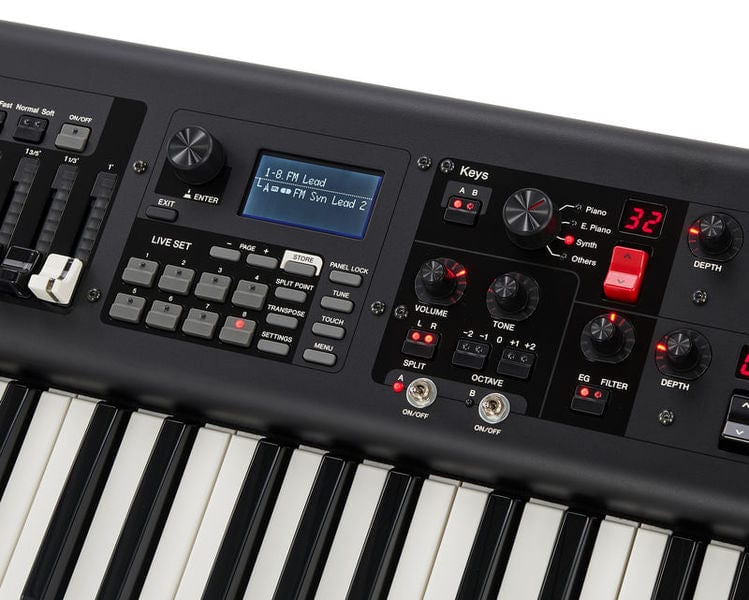
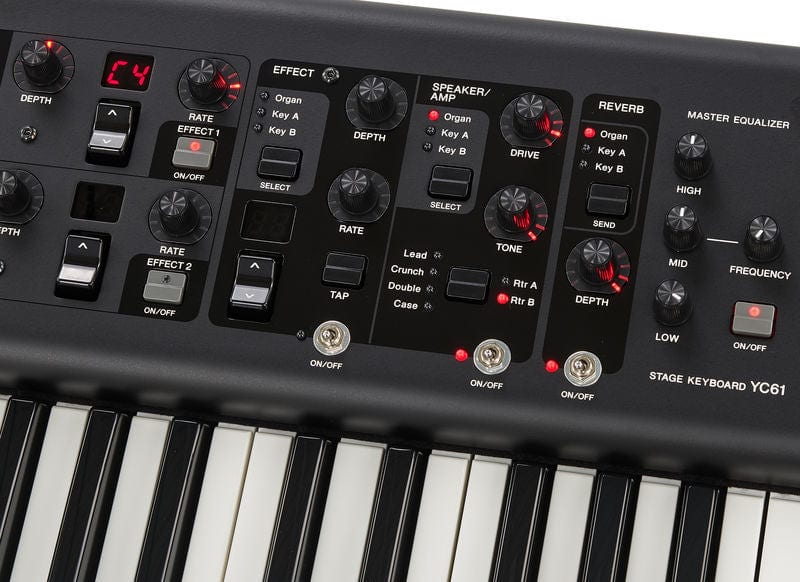
In keeping with instruments from other manufacturers (think Nord Electro!) and following in the footsteps of the CP series stage pianos, the YC61 has plenty of hands-on control. There are dedicated buttons, knobs, sliders and switches for the most-used functions. The YC61 has been developed with the live keyboard player in mind and whether you want to quickly switch up/down the octave of the keyboard part (you'll find yourself needing this button quite a bit with a 61 key keyboard), add some 'grit' to the sound using overdrive, or alter the volume of a pad sound behind your piano part, you'll find control to do it - and it's very easy.
Class-Compliant USB/MIDI Interface Built-In
The YC61 is also designed to operate as a powerful MIDI Master Keyboard to control soft synths and other MIDI devices such as sound modules and keyboards. The YC61 also integrates perfectly with your PC/MAC Digital Audio Workstation software with its onboard USB AUDIO/MIDI interface.
Connections
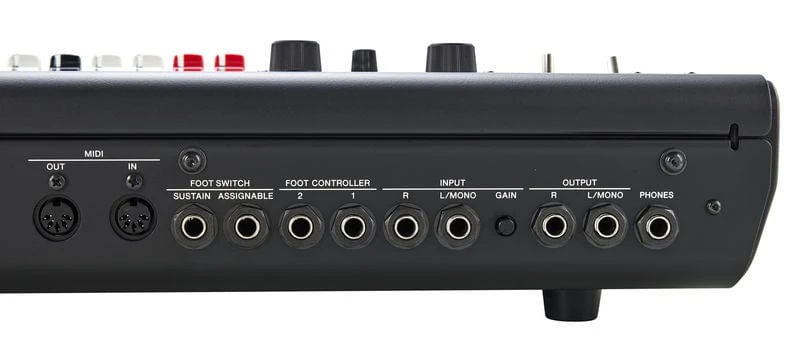
- OUTPUT [L/MONO]/[R] (6.3 mm, standard phone jacks, unbalanced)
- [PHONES] (6.3 mm, standard stereo phone jack)
- INPUT [L/MONO]/[R] (6.3 mm, standard phone jacks)
- FOOT CONTROLLER [1]/[2]
- FOOT SWITCH [SUSTAIN]/[ASSIGNABLE]
- MIDI [IN]/[OUT]
- USB [TO HOST]/[TO DEVICE]
- [AC IN] (mains adaptor included)
Yamaha YC61 Dimensions & Weight
- Width 896 / Depth 309 / Height 108 mm
- Weight 7.1 Kg
Original: $2,220.41
-65%$2,220.41
$777.14Product Information
Product Information
Shipping & Returns
Shipping & Returns
Description
Yamaha YC61 Drawbar Organ & Stage Keyboard
Following the introduction of their CP73 & CP88 stage pianos last year, Yamaha has added a new stage keyboard to their line-up - the YC61. Clearly aimed at competing for market dominance head-on with Nord's Electro 61 or Hammond's own SK Pro, the Yamaha YC61 features a 61 key waterfall keyboard and separate organ plus two 'keyboard voice' sections. These sections can be split or layered across the keyboard as required and your favourite settings (live sets) can be stored for convenient recall when playing live on stage.
The sound of the drawbar organ in combination with a rotary (Leslie) speaker was very popular in 1950's-70's music and can be heard on thousands of famous jazz, funk, pop and rock songs from that era. In recent times the sound has once again become an important part of most professional and semi-professional keyboard player's setups. Manufacturers are competing to maintain their spot on stage by producing keyboards known as 'clones' or 'clonewheels' - which is a take on the original way in which Hammond instruments made their unique sound by the use of Tonewheels.
As stated earlier in this piece, Hammond produces their own portable Hammond stage keyboard (the SK1) which also features perfectly adequate piano & keyboard sounds, as well as top quality Hammond organ voices.
So, let's take a look at what the Yamaha YC61 brings to the table!
Newly developed VCM Organ Technology
Yamaha's R&D team has created a new technology called Virtual Circuit Modelling (VCM) which they say recreates the behaviour of the key components & circuits that created the legendary Hammond drawbar sound. The results are certainly impressive and a good, wide range of convincing organ voices and tones can be created using the 9 drawbar controls.
Drawbars With Lights!
There's been a long-running debate between owners of Nord & Hammond instruments over the use of lights to indicate the current drawbar registration. Hammond instruments never had lights on the drawbar section, and the first Nord keyboards used a combination of up/down buttons and lights to control the drawbar setup.
The problem with not having lights means that if you choose a preset drawbar registration which had been previously saved, the current physical state of the drawbars doesn't necessarily represent the sound being heard. On a Nord instrument, the lights indicate the current setup - whether preset or manual, but the models with lights do not have physical drawbar sliders. Dexibell overcame this with the introduction of motorised drawbar sliders and now Yamaha has produced their own version where the drawbars as partially transparent - meaning you can see the lights under the drawbars to give the player an indication of the actual sound which is active.
It's not just about Hammond sounds though - there's a choice of three Farfisa type organ voices - made famous on songs such as Percy Sledge's 'When a Man Loves a Woman' or Elton John's 'Crocodile Rock'.
61 Key Waterfall Keyboard
Just like a piano, the 'feel' of an organ keyboard contributes to the playability. Ask any experienced organist and they will tell you that a non-weighted synth keyboard is not right for playing screaming Hammond solos, or even for vamping to add body to the overall sound. True Hammond organs have a 'waterfall' keyboard which has a little bit more resistance than a non-weighted synth keyboard action, and the edges of the keys are chamfered to facilitate glissandos.
The Yamaha YC61 features a newly developed waterfall keyboard which has been designed specifically for the modern organ player.
Full Range Of Sounds
To make the YC61 an all-round gigging instrument, Yamaha has included a wide variety of high-quality keyboard & synth sounds for a range of musical styles & situations. There are two impressive concert grand voices - the mighty CFX and S700 which have been derived from the same technology used in Yamaha's CP73 and CP88 stage pianos.
Yamaha is famous for the introduction of the DX7 synthesizer back in 1984 and of course, the beautiful FM Electronic Piano voice has been included - thanks to the onboard FM tone generator with 128 voice polyphony. There are also very good recreations of Fender Rhodes and Wurlitzer pianos - again taken from the CP series instruments.
In total there are 146 different voices (6 organs plus 139 other keyboard sounds). These other voices include synth pads, leads, strings, basses and percussion. There are sampled orchestral strings, guitars, brass, saxes & woodwind instruments, acoustic & electric basses, tuned percussion & accordions.
Lightweight for ultimate portability
The Yamaha YC61 weighs just 7.1KG which makes it the ideal tool for musicians on the road. There is a dedicated padded carry bag available from Yamaha which is called the SC-YC61.
Hands-On Control
In keeping with instruments from other manufacturers (think Nord Electro!) and following in the footsteps of the CP series stage pianos, the YC61 has plenty of hands-on control. There are dedicated buttons, knobs, sliders and switches for the most-used functions. The YC61 has been developed with the live keyboard player in mind and whether you want to quickly switch up/down the octave of the keyboard part (you'll find yourself needing this button quite a bit with a 61 key keyboard), add some 'grit' to the sound using overdrive, or alter the volume of a pad sound behind your piano part, you'll find control to do it - and it's very easy.
Class-Compliant USB/MIDI Interface Built-In
The YC61 is also designed to operate as a powerful MIDI Master Keyboard to control soft synths and other MIDI devices such as sound modules and keyboards. The YC61 also integrates perfectly with your PC/MAC Digital Audio Workstation software with its onboard USB AUDIO/MIDI interface.
Connections
- OUTPUT [L/MONO]/[R] (6.3 mm, standard phone jacks, unbalanced)
- [PHONES] (6.3 mm, standard stereo phone jack)
- INPUT [L/MONO]/[R] (6.3 mm, standard phone jacks)
- FOOT CONTROLLER [1]/[2]
- FOOT SWITCH [SUSTAIN]/[ASSIGNABLE]
- MIDI [IN]/[OUT]
- USB [TO HOST]/[TO DEVICE]
- [AC IN] (mains adaptor included)
Yamaha YC61 Dimensions & Weight
- Width 896 / Depth 309 / Height 108 mm
- Weight 7.1 Kg